Skills for trauma and substance use without shame or labels.
Women’s Trauma & Substance Use Skills Group in San Diego
A 12-week, in-person skills group in Point Loma for women coping with trauma symptoms and using alcohol, cannabis, or other substances to cope.
Tuesdays 6–7 PM | Point Loma, San Diego
$600 total ($50/session) | Payment due up front | Superbills available

Build a life you don’t need to escape from.

If you’ve lived through trauma, it makes sense that alcohol, cannabis, or other substances became a way to cope. Not because you’re broken—because your body learned what brought relief quickly.
For a lot of people, substances help you take the edge off, finally fall asleep, quiet your thoughts, feel less on high alert, or get a break from feeling too much (or nothing at all). And in the moment… it works. The hard part is what happens over time: the “reset” doesn’t last, anxiety bounces back, you feel more numb or more reactive, and shame shows up with a side of “why can’t I just handle this?”
This group isn’t about judging your coping or pushing an all-or-nothing approach. It’s about giving you more options—so when you’re triggered, overwhelmed, lonely, stressed, or tapped out, you have tools that actually help… not just something that helps fast and hurts later.
Women’s Trauma & Substance Use Skills Group is a skills-based, present-focused group for women who want to cope with trauma symptoms and change their relationship with substances through a harm reduction lens—whether you’re sober curious, cutting back, taking breaks, or maintaining recovery.
You won’t be asked to share graphic trauma details or “process” the past in a way that could overwhelm you (or other group members). Instead, you’ll learn practical tools for triggers, cravings/urges, grounding, boundaries, shame, and emotional overwhelm—and you’ll leave each week with a plan you can use in real life.

what to expect in the group:
-
This is a structured, 12-week group based on the Seeking Safety curriculum, an evidence-based approach designed for people coping with trauma/PTSD symptoms and substance use. Each week, we focus on one topic and build real-world skills you can practice immediately, such as grounding, managing triggers, setting boundaries, and using coping strategies, so you feel prepared to handle daily challenges.
-
12 weekly sessions (60 minutes)
Small, closed group (same members each week)
A mix of teaching + discussion + skill practice
Weekly take-home tools (simple, realistic, not “homework-y”)
A strong emphasis on choice, dignity, and shame-free change
-
You’ll learn skills to:
calm your body when it’s stuck in fight/flight/freeze
reduce cravings and urge-driven decisions
cope with triggers without spiraling
set boundaries and communicate more clearly
rebuild self-trust and consistency
What can the Women’s Trauma & Substance Use Skills Group help with?
This group is for women who:
Feel like their body is stuck in “high alert” mode, like you’re always tense, scanning for what could go wrong, and it’s hard to fully relax even when you’re safe.
Deal with anxiety, being jumpy/guarded, getting overwhelmed fast, shutting down, or feeling numb
Have been using alcohol, cannabis, or other substances to cope with stress—whether you’re cutting back, taking a break, sober curious, or in recovery
Get caught in shame loops, perfectionism, and that constant pressure of “I should be able to handle this by now.”
This group can help you:
Reduce the intensity and frequency of urges/cravings
Change “I need something to take the edge off” into “I have options.”
Build a plan for high-risk moments (stress, conflict, loneliness, shame)
Improve boundaries and relationships that keep pulling you into old patterns
Strengthen self-respect and self-compassion while also learning how to set goals and keep yourself accountable
Is this group right for you?

This group is a good fit for you if…
You have experienced trauma, and your body still reacts like you’re not safe
Substances have become a coping tool you want to change—without pressure or labels
You want skills, structure, and support, and accountability
You can commit to showing up weekly and practicing tools between sessions
You’re looking for a women-only space that feels grounded, direct, and real
This group may not be the best fit right now if…
You’re in an active crisis or need a higher level of care
You’re currently experiencing severe withdrawal risk that needs medical support
You’re unable to attend a group without being under the influence
You’re seeking trauma processing (this is a skills/stabilization group, not trauma narrative work)
Women’s Trauma & Substance Use Skills Group
What We’ll Cover (Week by Week)

Each week builds practical, real-life skills you can use immediately. You never have to share trauma details—this is about learning tools that help you feel steadier and more in control.
Week 1: Safety & Setting You Up for Success
We’ll set group agreements, define what “safety” looks like for you, and create a simple plan for getting through hard moments.
Week 2: Understanding Trauma Responses (Without Blaming Yourself)
Make sense of fight/flight/freeze/numb and why your body reacts the way it does—so you can work with it instead of against it.
Week 3: When Substances Become a Coping Tool
A shame-free look at your patterns, what substances do for you, and how to start building other options that actually work.
Week 4: Grounding Skills for Triggers & Overwhelm
Learn quick ways to come back to the present when you feel flooded, anxious, panicky, or checked out.
Week 5: Asking for Help (Without Feeling Like a Burden)
How to reach out, what to say, and how to build support that doesn’t rely on powering through alone.
Week 6: Boundaries as a Safety Skill
Clear, doable boundary tools—especially for relationships that trigger guilt, resentment, or people-pleasing.
Week 7: Compassion That Actually Helps You Change
Move from shame spirals to steady progress. We’ll practice self-compassion that’s real—not cheesy or passive.
Week 8: Coping With Triggers & Cravings
Build a “trigger plan” for the moments you usually reach for relief fast—stress, conflict, loneliness, celebrations, exhaustion.
Week 9: Honesty & Self-Trust
Strengthen self-trust by getting honest (with yourself and others) in a way that feels safe, not exposing.
Week 10: Healthy Relationships & Support That Works
Spot patterns that keep you stuck and learn what healthier connection looks like—without losing yourself.
Week 11: Recovery Thinking (Without All-or-Nothing Rules)
Shift the mindset that fuels spirals: “I messed up so I may as well…” Replace it with a harm-reduction, next-steps approach.
Week 12: Creating Meaning & Your Plan Moving Forward
Pull it together: what you’ve learned, what works for you, and a realistic plan to keep building stability after the group ends.
Interested? Start with a free screening call to make sure it’s a fit and to answer any questions before you commit.
Meet Your Group Facilitator:
Alexa Grossman, LCSW, LCAC
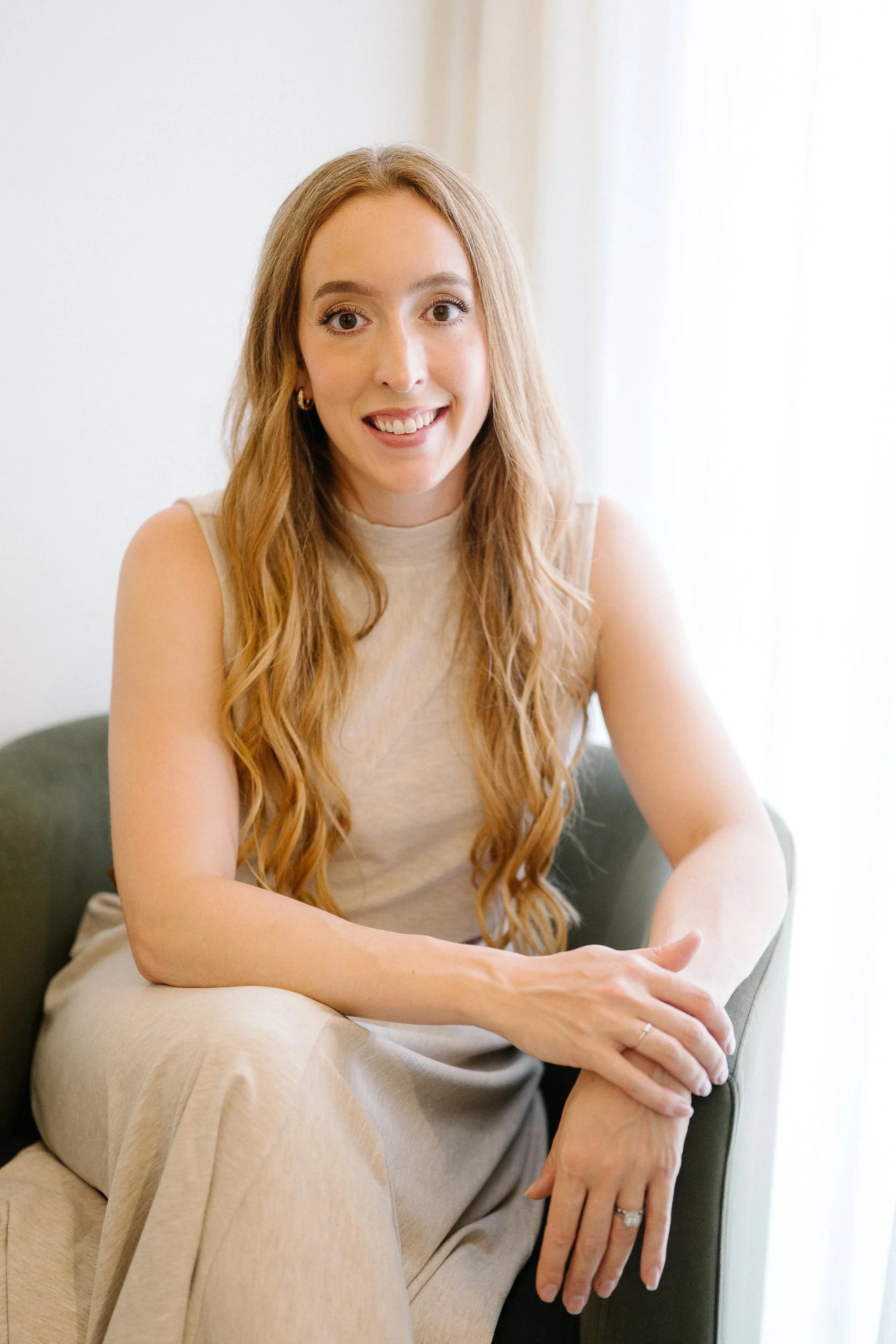
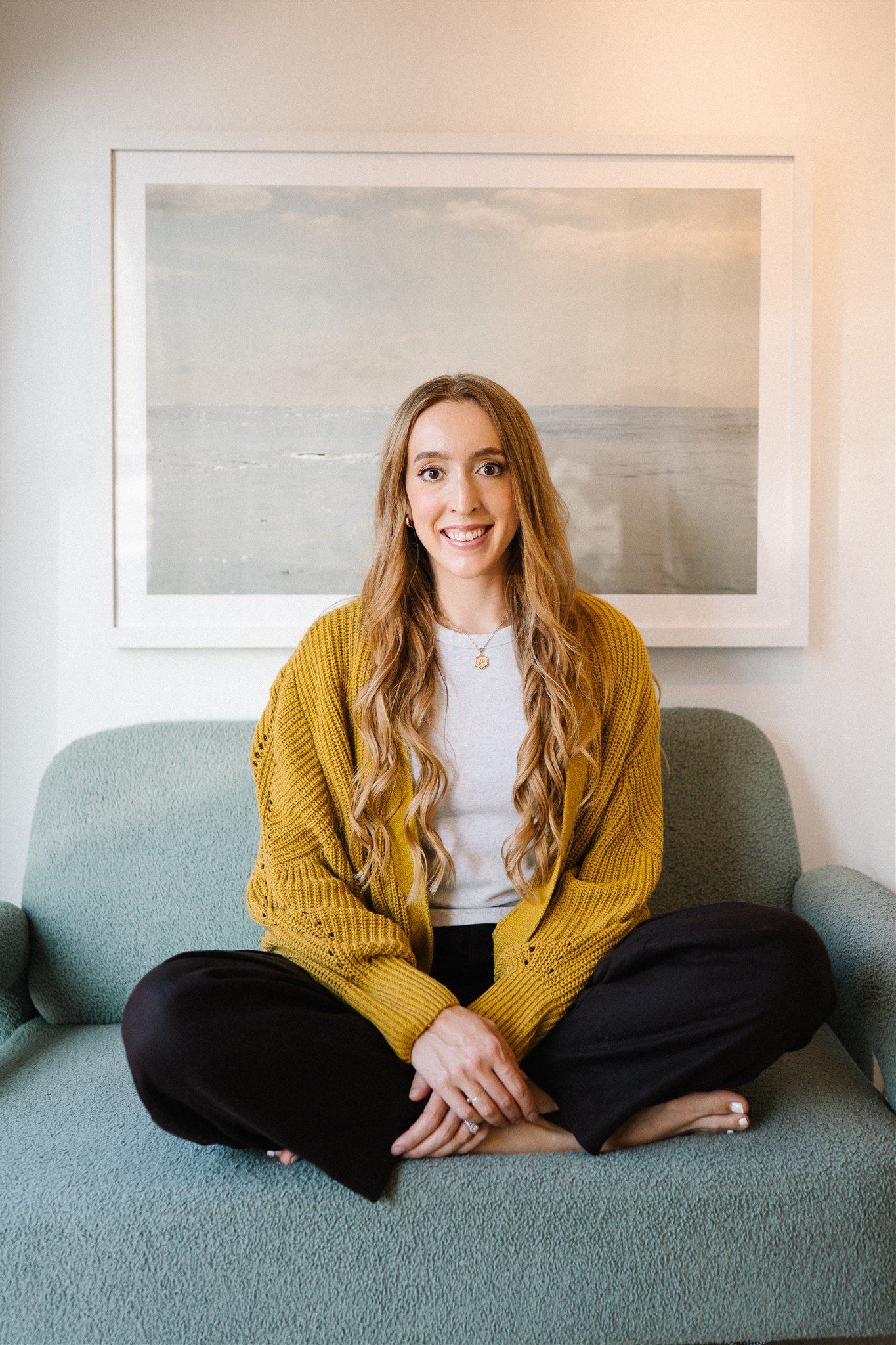
Hey, I’m Alexa, a trauma therapist and addictions counselor in San Diego. I specialize in trauma, anxiety, and substance use, and I use a harm reduction lens, meaning we focus on building safer, more intentional choices without shame or all-or-nothing rules. My style is direct, warm, and practical. You’ll get real tools you can use in the moments when you feel stuck.
Skills. Community. Lasting Change
Skills. Community. Lasting Change
Group Details
Format: Women-only, closed cohort
Start Date: Currently Enrolling for February/ March 2026
Length: 12 weeks
Time: Tuesdays 6–7 PM
Location: Point Loma (San Diego): 2924 Emerson Street, San Diego, CA, 92106
Group Size: 4-6 participants
Cost: $600 total ($50/group)
Payment: Due up front to reserve your spot
Superbills: Available upon request
Next step: Free 15-minute consultation call to confirm fit and answer questions

Feel safer in your body. Feel more confident in your choices.
Questions?
FAQs
-
No. This group is for women coping with trauma symptoms and using substances as a coping strategy—whether you identify with a diagnosis or not. Fit matters more than labels.
-
No. This group uses a harm reduction approach. That means we focus on safer, more intentional choices and reducing harm—whether your goal is cutting back, taking breaks, or maintaining sobriety.
-
No. This group isn’t 12-step or abstinence-only. It’s a skills-based, trauma-informed group that uses a harm reduction approach—meaning you don’t have to identify as an “addict” or commit to a specific program to benefit. You’re welcome, whether your goal is cutting back, taking a break, staying sober, or figuring out what you want your relationship with substances to be.
-
No. You will not be asked to share trauma details in this group. This is a skills-based, present-focused group—not trauma processing. We intentionally avoid trauma narrative work to protect everyone’s nervous system, reduce the risk of retraumatizing other group members, and keep the focus on practical tools you can use in daily life. You can share only what feels helpful and appropriate, and we’ll keep it grounded in the here-and-now.
-
Any type of substance use history is welcome in this group. Some members may be navigating alcohol or cannabis, while others may be working on different substances. The skills we use apply across the board because the focus is on triggers, urges/cravings, nervous system regulation, and building safer coping options—not on a specific substance.
-
This group can be a great fit for early recovery if you’re medically stable and able to participate without being under the influence during group.
-
This group is self-pay/out-of-pocket. Full payment for the 12-week series is due up front to reserve your spot. Some plans reimburse out-of-network services. We can provide superbills that you can submit to your insurance provider, but reimbursement depends on your plan.
-
Because this is a closed cohort and skills build week to week, regular attendance matters. We’ll discuss expectations during the screening call.
-
Start with a free screening call. If it’s a fit, you’ll receive group paperwork and payment details to reserve your spot.
-
Yes. This is a women-centered group that welcomes trans women and nonbinary people who feel aligned with a women’s space. If you’re unsure, you’re welcome to ask during the screening call.